Making a website is not a one-time task. However, it includes the process of ensuring that the site is optimized, secure, and capable of fulfilling its intended purpose of serving the audience. Regular site maintenance should be done as this helps to ensure that the website or blog is always presentable and functions effectively for the users. Here in this blog post, we are going to discuss how site maintenance is important, about quick fixes and how routine updates are good for website health.
Regular site maintenance plays a critical role in keeping a website secure, fast, and fully functional. Without regular site maintenance, even a well-designed website can face performance issues, security risks, and declining search engine visibility. Businesses that invest in regular site maintenance ensure long-term stability and consistent user satisfaction.
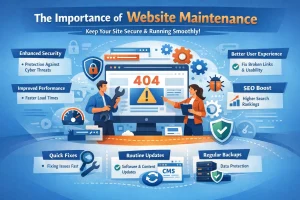
Why is it Important to Make Frequent Site Maintenance?
Regular site maintenance ensures that all website components work smoothly and efficiently over time. By performing regular site maintenance tasks such as checking links, updating software, and monitoring performance, website owners can prevent unexpected errors and maintain a professional online presence.
There are several things to ensure that their website is running optimally and that is where regular site maintenance comes in. It also involves such things as making certain links are still operational, that software is up to date, and performing proper checks to make certain all functionality is as expected. The benefits of regular maintenance are substantial:
- Enhanced Security: Websites are always vulnerable to different cyber threats. The rule, or routine, of site maintenance ensures that loose ends are sewn up, and the latest methods of security are implemented to moderate incidences of break-ins and record spills. This protective measure requires the most current security updates and close surveillance for any kind of suspicious activity.One of the biggest advantages of regular site maintenance is improved website security. Regular site maintenance helps identify vulnerabilities early and ensures that security patches are applied on time, reducing the risk of hacking, malware attacks, and data breaches.
- Improved Performance: Websites tend to become slow over time because of archaic codes, large image sizes or unneeded plug-ins. It increases your site’s efficiency, helps to minimise the load time and makes navigation as pleasant as possible. Users tend to stick around faster websites thus fetching better rankings in search engines.Through regular site maintenance, outdated code, heavy images, and unnecessary plugins can be removed to improve loading speed. Regular site maintenance directly impacts website performance, leading to faster page loads and better engagement from visitors.
- Better User Experience: These include forms and other balancing gizmos that need to be guaranteed to operate most optimally on a website that is well maintained. Looking for usability problems and broken links helps navigation to be very smooth, thus playing a major role in people sticking around.
- Search Engine Optimization (SEO): Google ranks websites depending on their activities after their inception and their upkeep status. It is possible for a website to undergo frequent basic maintenance to ensure that its content is updated and relevant in retaining consumers’ attention hence improving the SEO ranking. Moreover, checking broken links and the overall performance of the website can add to the possibilities of boosting the results in the search engine.
The Role of Quick Fixes
Whereas, routine update focuses on other areas, on the other hand, ‘fix it now’ concerns relate to problems that may arise to cause strife on site. Quick fixes are essential for resolving problems that may arise suddenly, such as:
- Broken Links: The 404 errors are not good for the users, and they are not good for your SEO. This is important in cases where web links are being used to direct users to certain content by checking on them and updating them.
- Performance Issues: If there are some problems such as slow loading time or any other similar issues occurring with the website, small fixes like, enhancing images, cleaning cache, or solving problems related to the server can offer the simplest solution.
- Bug Fixes: At times, you might stumble across such problems as some bugs or glitches that affect your website’s functionality. Dealing with such incidents in good time eliminates the probability of the occurrence of minor events into disasters that can impact your site’s usability.
Routine Updates and Their Benefits
Regular site maintenance includes routine updates that keep the website compatible with modern technologies. Performing regular site maintenance ensures that CMS platforms, themes, and plugins remain updated, which improves security, functionality, and overall website reliability.
Routine update is essential to all sites in the process of their maintenance. They involve:
- Software Updates: It is important to have a compatible and secured website by frequently updating CMS, plugins and themes. This may consist of fixing certain flaws in the operating system or the addition of new functionalities that can be of help to your site.
- Content Refreshes: Incorporating new information after a period is useful for the visitors to keep them interested, while at the same time informing the search engine crawlers that your site is active. This can help to increase the position of your site and hence traffic.
- Backup Procedures: It helps you to have a copy daily which is beneficial when a site crashes or the data stored on it is lost. Wiping is another maintenance activity, but its significance is in the combination of a backup strategy to protect your websites data.Ignoring regular site maintenance can result in broken functionality, poor rankings, and a negative user experience. On the other hand, consistent regular site maintenance supports long-term website growth, protects digital assets, and strengthens online credibility.
Conclusion
Through the steps of daily updates, fix the problems immediately. Considering the website’s health, you can save your website from malicious attacks, make sure that it functions effectively, and provide the user with a pleasant experience of browsing through the site. Prioritizing these aspects not only allows safeguarding of your online persona but also helps the functionality of your website and OPTIMISATION on search engines.

webadmin
WordPress guidance, troubleshooting tips and practical website advice from WP-Buddies.