Subdomains vs Subdirectories: Which Is Better for SEO?

When building a website, one common question is whether to use subdomains or subdirectories. The debate around subdomains vs subdirectories has existed for years because website structure can affect SEO, user experience, and content management.
Many businesses use subdomains to separate sections of their websites. Others prefer subdirectories because they keep everything under one domain. Understanding the strengths and weaknesses of each approach can help you make the right decision.
In this guide, we will compare subdomain vs subdirectory SEO, explain the differences between a subfolder vs subdomain, and help you decide whether a subdomain or subfolder is the best choice for your website.
What Are Subdomains?
A subdomain is a separate section of your website that appears before the main domain name.
Examples:
- blog.example.com
- shop.example.com
- support.example.com
Search engines often treat subdomains as separate properties. While they remain connected to the main domain, they may build authority independently.
Many large companies use subdomains to organize different services and platforms.
What Are Subdirectories?
A subdirectory, also called a subfolder, appears after the main domain name.
Examples:
- example.com/blog/
- example.com/shop/
- example.com/support/
Subdirectories remain part of the main website. All content contributes to the overall authority of the domain.
This structure is commonly used for blogs, service pages, and content marketing campaigns.

Key Differences Between Subdomains and Subdirectories
Although they may appear similar, they function differently.
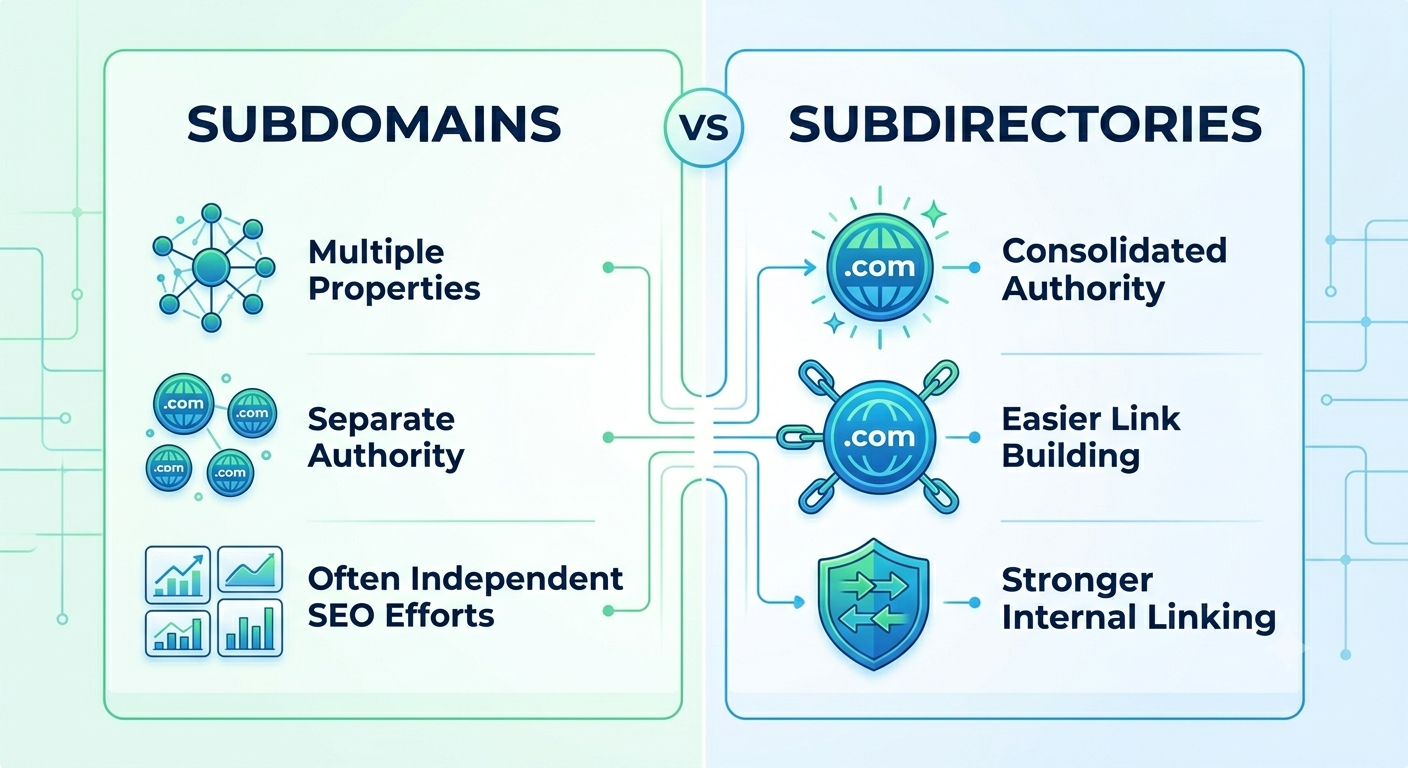
Subdomains
- Can operate as separate websites
- Easier to manage independently
- May require separate SEO efforts
- Often used for unique applications
Subdirectories
- Share authority with the main domain
- Simpler for SEO management
- Easier internal linking
- Better for consolidating ranking signals
Understanding these differences is important when comparing a subfolder vs subdomain strategy.
Subdomain vs Subdirectory SEO
The biggest reason website owners discuss subdomain vs subdirectory SEO is search visibility.
Google has stated that both structures can rank well. However, many SEO professionals prefer subdirectories because they allow authority to remain within a single domain.
When content lives in a subdirectory, backlinks and engagement signals often strengthen the entire website.
For example:
- example.com/blog/
- example.com/services/
Both sections contribute to the authority of example.com.
With subdomains, authority may be distributed across separate properties.
For example:
- blog.example.com
- shop.example.com
Each section may need its own backlink profile and SEO strategy.
For most websites, subdirectories provide a stronger foundation for long-term organic growth.
Benefits of Using Subdomains
Subdomains can be useful in specific situations.
Better Content Separation
They help organize content that serves a different purpose from the main website.
Independent Management
Different teams can manage separate sections without affecting the primary website.
Flexible Hosting
Subdomains can run on different servers or platforms.
International Websites
Many companies use country-specific subdomains.
Examples:
- uk.example.com
- us.example.com
Benefits of Using Subdirectories
Subdirectories offer several SEO advantages.
Stronger Domain Authority
All content contributes to one domain.
Easier Link Building
Backlinks benefit the entire website.
Better Internal Linking
Pages can pass authority more efficiently.
Simpler Analytics
Tracking traffic and performance becomes easier.
For businesses focused on content marketing, subdirectories are often the preferred choice.
Marketing Automation and SEO: Subdomains vs Subdirectories
The discussion around marketing automation and SEO subdomains vs subdirectories is especially important for growing businesses.
Marketing teams often place landing pages, resource centers, and campaign assets on separate platforms. This frequently leads to the use of subdomains.
While this approach can simplify management, it may split SEO value across multiple properties.
Using subdirectories allows marketing content to strengthen the main website’s authority. This can improve rankings for both commercial and informational pages.
Businesses that rely heavily on organic traffic often achieve better SEO results by keeping marketing content within subdirectories whenever possible.
When Should You Use a Subdomain?
A subdomain may be the right choice if:
- You operate multiple independent platforms.
- Different teams manage different sections.
- You require separate hosting environments.
- You run a support portal or knowledge base.
- You manage international websites.
In these situations, a subdomain or subfolder decision depends on operational requirements rather than SEO alone.
When Should You Use a Subdirectory?
A subdirectory is usually the better option when:
- SEO is a top priority.
- You publish regular blog content.
- You want all authority under one domain.
- You need stronger internal linking.
- You want easier website management.
For most small businesses, bloggers, and service providers, subdirectories provide the best balance between SEO and usability.
Common SEO Mistakes to Avoid
Choosing a Structure Without a Plan
Changing your website structure later can create redirects and traffic loss.
Splitting Content Unnecessarily
Avoid creating subdomains when content naturally belongs on the main website.
Ignoring Internal Links
Internal links help distribute authority throughout your site.
Forgetting User Experience
Always prioritize a structure that is easy for visitors to navigate.
Migrating Without Proper Redirects
If you move content between subdomains and subdirectories, implement proper 301 redirects.
Final Verdict
The answer to the subdomains vs subdirectories debate depends on your goals.
If your primary objective is SEO growth, content marketing, and authority building, subdirectories are usually the better choice. They consolidate ranking signals and strengthen the overall domain.
Subdomains remain useful for separate platforms, international websites, and independent applications. However, they often require additional SEO effort.
For most businesses, the winner in the subdomain vs subdirectory SEO discussion is the subdirectory structure. It provides stronger authority consolidation, easier management, and better long-term SEO performance.
When deciding between a subfolder vs subdomain, focus on your website’s goals, technical requirements, and growth strategy before making a final decision.

webadmin
WordPress guidance, troubleshooting tips and practical website advice from WP-Buddies.